Home › Asphalt Pathways, Sidewalks, and Trails
Precision Asphalt New York provides asphalt pathway paving in Brooklyn, NY for parks, campuses, and commercial sites. We construct smooth, accessible sidewalks and multi use trails that handle constant foot and bike traffic. Our team shapes gentle grades and transitions for comfortable, ADA friendly paths.
Precision Asphalt New York provides professional asphalt pathway paving throughout Brooklyn, NY, New York and the surrounding area. Our licensed, insured crew delivers safe, clean, on-time work with a free estimate before anything begins. Call (332) 264-5090 or request your free quote.
Asphalt Pathways, Sidewalks, and Trails in Brooklyn, NY
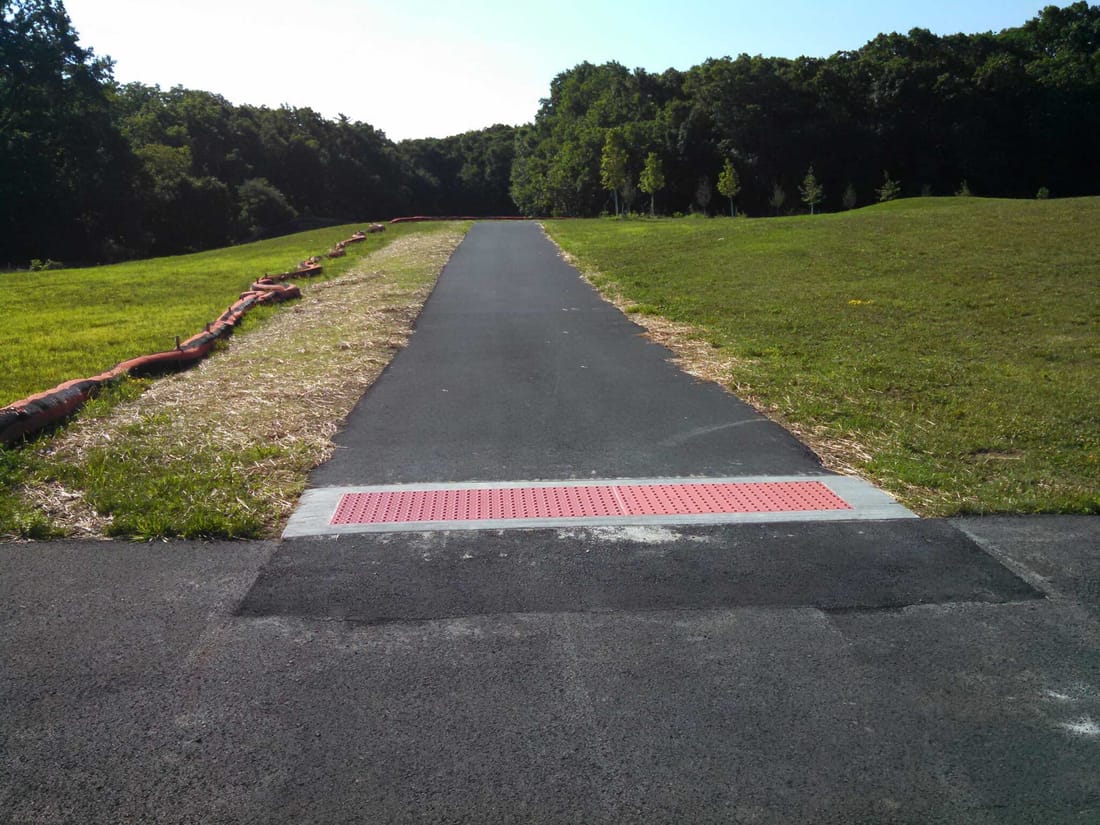
Asphalt pathways, sidewalks, and trails take a lot of abuse in Brooklyn. Foot traffic, delivery carts, bikes, strollers, and winter freeze-thaw cycles all work against the surface. Precision Asphalt New York builds these paved areas to handle that reality, not just to look good on day one.
When we look at a pathway project, we start with how it will be used. A narrow garden path behind a brownstone does not need the same structure as a shared-use trail in a public park or a sidewalk in front of a mixed-use building on a busy avenue. We adjust base thickness, asphalt mix, and edging details to match the actual load and traffic pattern of your space.
In Brooklyn, the other factor that controls design is drainage. Old neighborhoods have tight lots and hard surfaces everywhere. Water that sits on a pathway in November will expand when it freezes and start to break the asphalt apart by March. Our approach focuses on slope, water escape routes, and base materials that drain instead of trapping moisture under the pavement.
Precision Asphalt New York handles everything from small access strips along townhouses to longer walking loops in residential complexes and community gardens. We stay within New York City requirements for sidewalk pitches, cross slopes, and accessibility so you are not stuck redoing work after an inspection.
How Asphalt Pathway Paving Is Actually Installed
For a typical Brooklyn pathway or sidewalk, the work begins with layout and excavation. We mark the exact edges, check elevations against door thresholds, stoops, and existing sidewalks, then excavate to the depth needed for the base and asphalt layers. In tight backyards and side yards we use compact machinery or hand tools to avoid damaging fences, landscaping, and utilities.
Once the subgrade is exposed, we compact it and correct any soft spots. If the soil is weak or holds water, we may undercut another few inches and bring in clean, compactable material. This step is what keeps a pathway from settling, cracking, or heaving after a couple of winters. Skipping it is how you end up with trip hazards and puddles.
Next comes the aggregate base. For most pathways, we install 4 to 6 inches of crushed stone, compacted in layers. For heavier-use sidewalks or service paths that will see carts and light vehicles, we might increase this to 8 inches. The base is shaped with a slight cross slope or crown so water moves off the finished surface.
Then we install the asphalt itself. For pedestrian work in Brooklyn, Precision Asphalt New York usually uses a fine-graded surface mix that compacts tight and smooth. Thickness is typically 1.5 to 2 inches after compaction, but we may go thicker at drive apron tie-ins or areas that might occasionally see vehicle loading. We place the asphalt while it is hot, rake to shape, then compact with the appropriate roller or plate compactor depending on access.
Edges are a critical detail. On pathways without concrete curbs, we often recommend a compacted shoulder of stone or soil and, where appropriate, metal or plastic edging to contain the asphalt and keep it from unraveling. For sidewalk replacements along the street, we pay close attention to the joints where our asphalt meets existing concrete, pavers, or stoops so there is no abrupt lip.
Design Options, Layout, and Accessibility
Asphalt might seem simple, but there are real design choices that affect how your pathway, sidewalk, or trail performs and looks. First is alignment. In small Brooklyn yards, we often suggest gentle curves instead of tight zigzags so shoveling and sweeping are easier and the pavement wears evenly. For longer trails in multifamily properties or parks, we look at sightlines and lighting so people can see clearly at night and in winter.
Width is another decision. A basic garden path may work at 3 feet wide, but two people cannot comfortably walk side by side at that width. Common sidewalk widths are 4 to 5 feet, and for shared-use paths inside a property we usually recommend 6 to 8 feet if space allows. Precision Asphalt New York will walk the site with you and lay out mock widths with paint or string so you can visualize the space before we commit.
Surface finish can be tuned. Standard machine-finished asphalt provides a smooth, comfortable walking surface. In areas where slip resistance is critical, such as near building entrances or on slopes, we can adjust compaction patterns and sometimes blend aggregate sizes to increase texture without making the surface rough or hard to shovel.
Accessibility has to be part of the design. We set slopes to meet ADA guidelines where applicable, especially for new sidewalks that connect to public ways and entrances. That means careful attention to cross slopes, transitions at gates and thresholds, and smooth changes in elevation. If you are replacing uneven concrete slabs that have become a trip hazard, we can adjust the grade to eliminate abrupt changes that violate city standards.
Color and edging details add to the final look. While most clients choose standard black asphalt, we can discuss sealcoat timing and, in some private settings, specialty coatings that change appearance or reflect more light. Edging can be as simple as a clean cut into the soil or as defined as steel edging, timber borders, or concrete bands that frame the pavement and protect the edges.
What Affects Cost for Asphalt Pathways and Sidewalks
Pricing for asphalt pathway paving in Brooklyn is driven by more than just square footage. Access is a major factor. If trucks and rollers can get close to the work area, production is faster and costs stay down. If we are hauling materials through a narrow alley or across a building interior to reach a rear yard, labor goes up and we may have to use smaller equipment.
Existing conditions also play a big role. Removing old concrete sidewalks, tree roots, or failed asphalt adds time and disposal costs. If we find saturated or unstable base materials under an old path, we will recommend correcting it instead of just paving over the problem. This increases upfront cost but avoids early failure, which is almost always more expensive long term.
Depth of base and asphalt thickness change the material cost significantly. A light-use garden walk with a 4 inch base and 1.5 inch surface costs less per square foot than a sidewalk that needs an 8 inch base with a 2 inch surface layer. Precision Asphalt New York will explain why a certain section needs more structure, such as at trash storage areas, loading points, or building entries with frequent deliveries.
Site features like trees, fence lines, and utilities affect the work. Preserving mature trees might require rerouting a path or using techniques to minimize cutting large roots. In some cases, that is cheaper than repairing a heaved path every few years. If a pathway crosses known utility lines, we may need to shallow the excavation or adjust alignment, which can change the scope.
We provide itemized estimates, not a single lump number. You will see separate lines for demolition, base preparation, asphalt installation, and any extras such as edging, drainage components, or patching at tie-in points. That transparency allows you to adjust scope intelligently instead of guessing where the money is going.
Common Problems in Brooklyn and How We Prevent Them
Older Brooklyn sidewalks and pathways usually fail for predictable reasons. One is poor drainage. Water sits against the building or along the edge of the path, then winters and traffic do the rest. Precision Asphalt New York addresses this by planning subtle but consistent slopes and, where needed, adding swales or small drainage features to move water to a better location.
Tree roots are another issue. In many neighborhoods, street and yard trees push up slabs and crack older asphalt. Before we start, we look for root patterns and, when possible, shift the alignment or widen one side slightly to avoid the worst intrusion. Where roots cannot be avoided, we may recommend root pruning done by a qualified arborist and then install the base and asphalt in a way that reduces voids where roots can easily lift the pavement.
Freeze-thaw damage is inevitable in New York, but it does not have to destroy your paths every few years. The main defense is a stable, well-draining base and tight compaction. We also pay attention to joints where new asphalt meets concrete or older pavements, because these are common failure points. A clean, properly cut joint with good bonding and consistent thickness is less likely to open and let water in.
Utility work is a reality under city sidewalks and access paths. To make future repairs less disruptive, we coordinate around known access points and manholes, and where reasonable, we design sections that can be cut and patched cleanly if ConEd, DEP, or a plumber needs to get underneath later. Straight, well-defined edges cut more cleanly and patch better than irregular shapes.
Maintenance expectations are covered before we leave. We explain when you can walk on the new surface, when snow shoveling is safe, and when it makes sense to consider sealcoating for private pathways. Clear instructions help you avoid early scuffing, gouging, or damage from snow removal equipment.
Timing, Permits, and Working in Tight Brooklyn Spaces
In Brooklyn, the best time for asphalt pathway paving is typically from late April through October, when temperatures stay warm enough for the asphalt to compact properly and cure evenly. We do work outside that window when conditions allow, but for critical or appearance-sensitive projects, we recommend scheduling during the heart of the season.
Sidewalks that tie into the public right of way often involve NYC Department of Transportation or Department of Buildings rules. If your project includes city sidewalk segments, violations, or curb work, we will explain which parts require permits or specific forms and how that might impact schedule and cost. For private internal paths in courtyards, backyards, and campuses, permitting is usually simpler, but we still coordinate with property managers and boards if needed.
Working in Brooklyn means working around people. Precision Asphalt New York sets up clear work zones, temporary walkways, and signage so residents, customers, or tenants can still move safely while we work. For commercial and multifamily properties, we often phase the job so one entrance or route remains usable at all times.
Access and staging in tight spaces are planned in advance. We look at truck routes for material delivery, where equipment can be parked, and how we will move hot asphalt to the work area without crossing delicate surfaces. In some brownstone blocks, that means smaller loads, more hand work, and careful protection of stoops and railings.
Before you hire any asphalt contractor, ask specifically how they will handle drainage, base preparation, and access at your property, and ask to see examples of their pathway or sidewalk work in neighborhoods similar to yours. We are happy to walk you through recent projects in Brooklyn so you can see how our approach holds up in real use.