Home › Walkway and Pathway Paving
Precision Asphalt New York delivers asphalt walkway paving in Brooklyn, NY for safe, comfortable paths around your home. We design and build walkways that handle foot traffic, strollers, and bikes while blending with your landscaping. Our team manages grading and drainage so your paths stay smooth and puddle free.
Precision Asphalt New York provides professional asphalt walkway paving throughout Brooklyn, NY, New York and the surrounding area. Our licensed, insured crew delivers safe, clean, on-time work with a free estimate before anything begins. Call (332) 264-5090 or request your free quote.
Asphalt Walkways and Paths Built for Brooklyn Foot Traffic
Walkways in Brooklyn live a harder life than most. Constant foot traffic, delivery carts, bikes, freeze-thaw cycles, and tree roots all work against them. Precision Asphalt New York designs asphalt walkway paving specifically for these conditions, so your paths stay smooth, safe, and easy to maintain.
We work on brownstone front walks, side-yard paths, access routes to garages, small apartment buildings, schools, churches, and commercial properties. Instead of treating a walkway like a mini road, we look at how people actually move through the space, where water wants to go, how often the path will be shoveled, and whether wheelchairs, strollers, or hand trucks will use it.
Before we price anything, we walk the site with you. We check existing grades, drainage patterns, trip hazards, and nearby trees. In Brooklyn, tree roots are a major concern, especially along the sidewalk and in shared courtyards. We identify roots that will create heaving issues and talk through options: root pruning with an arborist, rerouting the path a few inches, or adjusting base depth to bridge over roots.
From there, we suggest asphalt thickness and base build-up that match the use. A lightly used garden path does not need the same structure as a heavily used apartment entry, and we do not upsell thickness that does not add value. Every recommendation is tied to what your walkway will actually handle day to day.
How Precision Asphalt New York Builds a Durable Asphalt Walkway
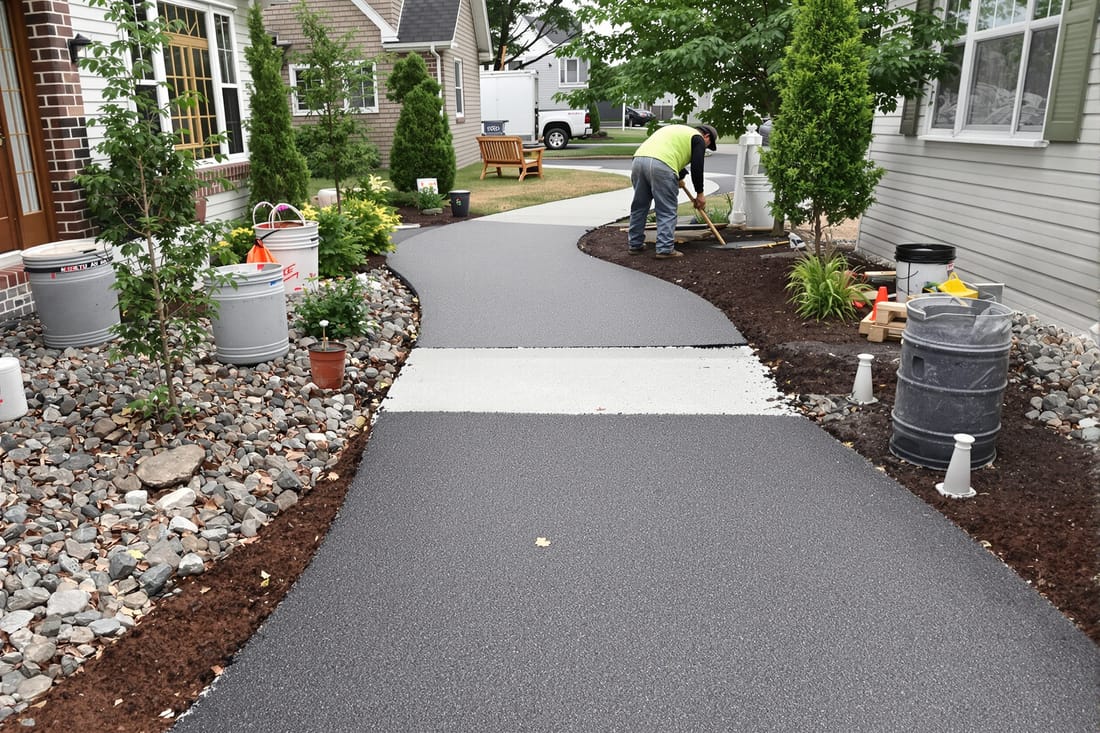
Our process is straightforward and transparent. First, we handle layout. We mark the path with paint and string lines so you can see the exact alignment and width before any soil is moved. Typical residential walkways run 3 to 4 feet wide, but for two people walking side by side or for wheelchair access, we often recommend 4 to 5 feet.
Next is excavation. For most Brooklyn walkways, we remove 4 to 8 inches of soil or old material, depending on how unstable the existing ground is and how much load the path will carry. Old concrete or broken asphalt is cut, broken out, and hauled away. We also remove soft organic soil and trash fill that is common behind older buildings.
Once the subgrade is exposed, we compact it with a plate tamper or roller. Any soft spots are dug out and replaced with crushed stone. A walkway is only as good as its base, and this step is what prevents depressions and cracks later.
We then install a base layer of NYSDOT-spec crushed stone (often 3/4 inch minus). For a typical residential walkway, base depth is 3 to 6 inches. The base is graded to provide a slight pitch, usually 1 to 2 percent, so water runs away from your building and toward a yard, street, or drain. We compact the base in thin lifts, which is critical in Brooklyn yards where soil can be mixed and uneven.
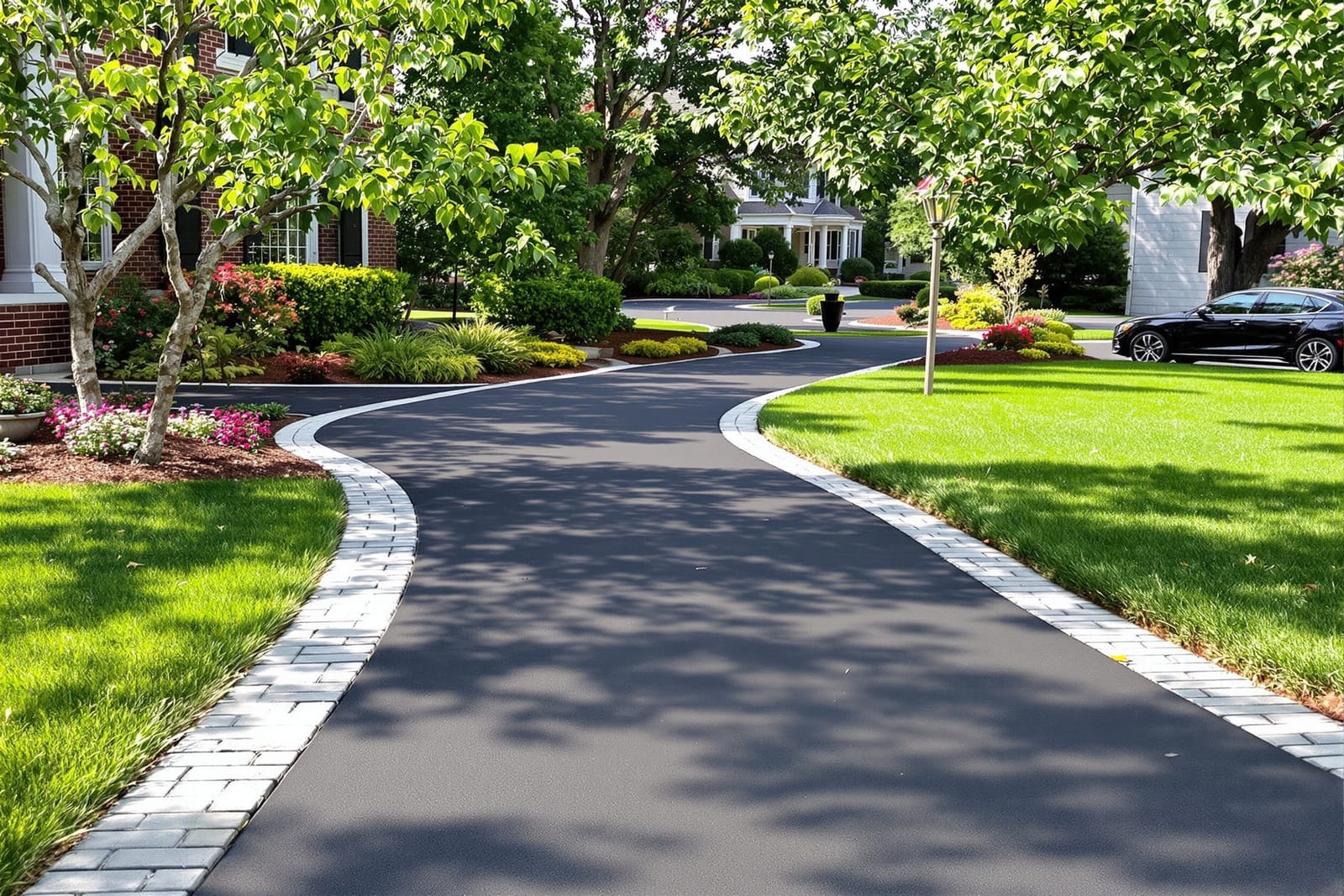
For edges, we use one of three methods: formed asphalt edges, steel or aluminum edging, or concrete borders. In high-visibility front entries, many Brooklyn owners choose concrete or paver borders with asphalt infill, which keeps the path neat and protects the asphalt edge from crumbling.
Finally, we install the asphalt surface course. For walkways, we typically use a fine or medium-fine mix, laid at about 2 to 3 inches compacted thickness. The mix is spread, raked to final grade, and compacted with a roller and hand tampers around edges. We pay close attention to joints where the new path meets existing steps, stoops, or sidewalks so you do not end up with trip lips.
Design Choices for Walkways and Paths in Tight Brooklyn Spaces
Even a simple asphalt walkway can be customized so it works better and looks like it belongs on your property. Precision Asphalt New York walks you through options that matter in Brooklyn spaces where every inch counts.
Layout is the first design choice. Straight runs are more affordable, but a gentle curve can help avoid tree roots, utilities, or awkward corners. In narrow side yards, we often recommend straight lines for easy snow shoveling. In shared backyards, a curved or branched layout can direct people to different entrances or seating areas.
Width matters more than many people expect. For single-file access along a house, 3 feet is usually enough. For stroller traffic, trash bins, or two-way passing, 4 feet is more comfortable. For ADA-friendly access, we plan for 4 feet minimum and consider turning radii if wheelchairs will be used.
Surface texture and mix choice also play a role. Finer mixes give a smoother surface that is easier for wheeled carts and mobility devices. Slightly coarser surfaces provide more traction on sloped paths near basements or down to backyards. For shaded Brooklyn yards that stay damp, we lean toward mixes and slope details that shed water quickly.
Edging is another place to make smart decisions. A clean asphalt edge looks simple but can ravel over time if people step off the side regularly. Where foot traffic spills off the edge, we recommend concrete, stone, or metal edging. In front of brownstones, a common approach is a concrete or bluestone band with asphalt in the center, which keeps the historic look while keeping costs down.
Lighting and drainage both tie into the walkway design. We coordinate elevations with existing drains or add simple drainage swales beside the path so water does not end up at your foundation or basement door. If you plan to add low-voltage lights, we can leave sleeve conduits under the path so wires can be pulled later without cutting the new asphalt.
Cost, Timeline, and Local Factors That Affect Your Walkway Project
Walkway and pathway paving costs in Brooklyn depend on five main things: size, access, base work, edging choice, and how much demolition is required. Precision Asphalt New York explains these up front so you can see where the money goes.
Size is straightforward: more square footage means more material and labor. However, very small walkways can have a higher cost per square foot because mobilizing crew and equipment is the same whether the job is 80 square feet or 400.
Access is often the hidden factor in Brooklyn. If your path is in a backyard that can only be reached through a narrow alley or basement, we may need to use smaller equipment or hand tools. That increases labor time. When there is clear side or rear access for a small skid steer or mini dumper, costs are lower and work goes faster.
Base work is where projects can differ the most. Replacing a thin, failing base with a proper crushed stone foundation adds cost but also adds many years of life. On some Brooklyn lots, we find old construction debris under existing walkways. If we hit unstable materials, we will show you exactly what we find and explain the options before proceeding.
Edging choices affect both look and price. Asphalt-only edges are most economical. Concrete or stone borders cost more but reduce edge damage and help with snow shoveling because the shovel rides on the hard edge instead of the asphalt.
On timeline, most residential walkways take one day of active work, sometimes two if there is heavy demolition or complex borders. In busier commercial or multifamily settings, we schedule work to keep at least one safe access route open. Asphalt is typically walkable the same day within a few hours of compaction, but we recommend avoiding heavy hand truck loads for at least 24 hours.
Permits are usually not required for interior-yard walkways that do not change drainage toward neighbors. If you are altering a front approach close to the public sidewalk or if water may redirect across property lines, we sometimes advise checking with DOB or your building management. For co-ops and condos, we can supply insurance certificates, site plans, and written scope descriptions for board approval.
What Brooklyn Property Owners Should Know Before Hiring a Paving Contractor
Walkway and pathway paving seems simple, but the details are what separate a path that holds up from one that breaks apart in a few winters. Precision Asphalt New York encourages Brooklyn owners to ask any contractor specific questions before saying yes.
Ask how they handle base preparation for walkways versus driveways. A contractor who uses the exact same approach for both is not tailoring to actual foot traffic and soil conditions. Ask what base depth they plan, what type of stone they will use, and how many passes of compaction they will perform.
Ask how they deal with drainage and slope. You want to hear specific numbers, like a 1 to 2 percent pitch away from your building, and how they will prevent water from collecting at the bottom of stairs or against foundation walls. In Brooklyn, poor drainage often shows up as basement seepage or icy spots in winter.
Ask about transitions. A quality walkway should meet your stoop, steps, and sidewalks without abrupt lips. We routinely bevel and hand-tamp these areas and will talk through how we will tie into any future work you plan, such as replacing a stoop or adding a patio.
Ask who is actually doing the work. Our own crews install the walks we design, which means accountability if something is not right. We also stand behind our compaction and drainage choices. If we recommend a certain detail and it does not perform as represented under normal use, we come back to fix it.
Finally, think about maintenance. A well-built asphalt walkway in Brooklyn typically needs very little attention for years, but periodic crack sealing and edge care can add a lot of life. We can show you the specific spots on your property that are most likely to need touch-ups, such as near tree roots or where delivery carts always cut the same corner, so you know what to watch for after the work is complete.