Home › Asphalt Sealcoating & Crack Filling
Precision Asphalt New York provides asphalt sealcoating in Brooklyn, NY to shield your driveway from sun, salt, oil, and water damage. Our team cleans and prepares the surface, fills cracks, then applies a rich, even coat of sealer. Routine sealcoating restores color, slows deterioration, and keeps your driveway looking sharp for years.
Precision Asphalt New York provides professional asphalt sealcoating throughout Brooklyn, NY, New York and the surrounding area. Our licensed, insured crew delivers safe, clean, on-time work with a free estimate before anything begins. Call (332) 264-5090 or request your free quote.
Asphalt Sealcoating & Crack Filling in Brooklyn, NY
In Brooklyn, asphalt takes a beating from traffic, salt, and constant freeze-thaw cycles. At Precision Asphalt New York, our asphalt sealcoating and crack filling work is focused on those real conditions, not a one-size-fits-all approach.
Sealcoating is a protective coating that goes on top of existing asphalt. It helps block water, UV rays, oil, and road salt from getting into the pavement and breaking it down. Crack filling is different. That is where we clean out individual cracks and fill them with a flexible material so water cannot get inside and widen the damage.
Most calls we get in Brooklyn are from owners who see raveling (loose gravel on the surface), spiderweb style cracking, or lines of cracks where car tires sit. We look at your lot or driveway, figure out whether the base is still sound, and then decide how much crack repair is needed before any sealcoat goes down. We never recommend sealcoating over deep structural damage because that hides the problem for a short time and wastes your money.
If you need a quick timeline: smaller driveways and compact parking areas are usually done in one day, with striping the following day if needed. Larger lots may take two days so we can section off areas and keep part of the property open. We plan around Brooklyn traffic patterns, garbage pickup, and delivery schedules so our work does not shut down your building for longer than needed.
How Precision Asphalt New York Actually Does Sealcoating
Good sealcoating is 80 percent prep and 20 percent material. Our crews start by power blowing and broom sweeping the asphalt to clear dust, sand, and loose rock. In Brooklyn, we also pay special attention to edges where soil, leaves, and trash build up along fences, sidewalks, and curb lines. Anything loose under the coating will cause premature peeling.
Next, we pretreat oil spots. In many commercial lots, especially near loading docks and food delivery areas, oil saturation is heavy. We scrub those spots with a detergent or primer that helps the sealer bond. If oil has fully soaked into the asphalt, we may recommend a localized patch, because a sealer film will not stay down long over a soft, oil soaked area.
For the material itself, Precision Asphalt New York typically uses a refined coal tar or asphalt emulsion sealer mixed with water, sand, and additives. Coal tar is very resistant to gas and oil, which is helpful for busy parking lots and gas station areas. Asphalt emulsion has lower odor, which is sometimes better for residential driveways or buildings with tenants who are sensitive to smell. We explain both options, including odor, cure time, and durability, and you choose what fits your property.
We apply sealer either by spray, squeegee, or a combination of both. On rough, older surfaces, a squeegee coat first helps push material into voids, then a spray coat gives a more uniform finish. On smoother, newer pavement, spraying may be enough. Most Brooklyn properties get two thin coats instead of one thick coat, which gives better curing, fewer scuff marks, and longer life in our climate.
Cure times depend on temperature, shade, and airflow between your buildings. As a rule, we suggest no foot traffic for 4 to 6 hours and no vehicles for 24 hours, sometimes 36 in cooler weather. On apartment or mixed use properties, we often phase the work so tenants still have some parking available while each section cures.
Crack Filling: What We Fix Before Any Sealer Goes Down
If you seal over open cracks, water still reaches the base and the asphalt will keep breaking apart. That is why Precision Asphalt New York treats crack work as its own step, not an add on.
We start by categorizing cracks: hairline, alligator (webbed), and larger single line cracks. Hairline cracking often gets sealed over without individual filling, as long as the sealer is applied correctly. Alligator cracking, which looks like broken glass or a reptile skin pattern, usually means the base is failing in that area. In those spots, we will often recommend saw cut removal and patching instead of simple crack fill because the movement will quickly reopen the cracks.
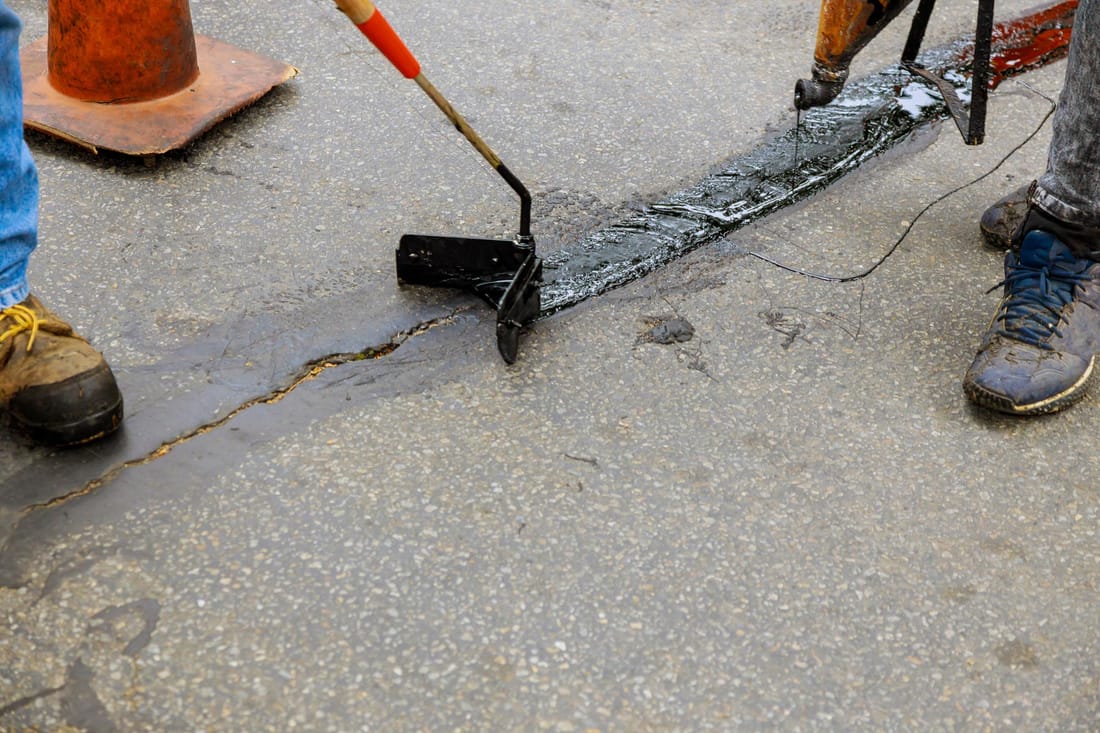
For standard working cracks, usually 1/4 inch to 1 inch wide, we use hot-pour crack sealant or a specialized cold-pour product depending on site limits. In busy Brooklyn streets and alleys where open flame is not practical or safe, we may choose high grade cold applied materials. On larger commercial lots or private drives where we can cordon off space, we typically use hot rubberized sealant for better flexibility and life.
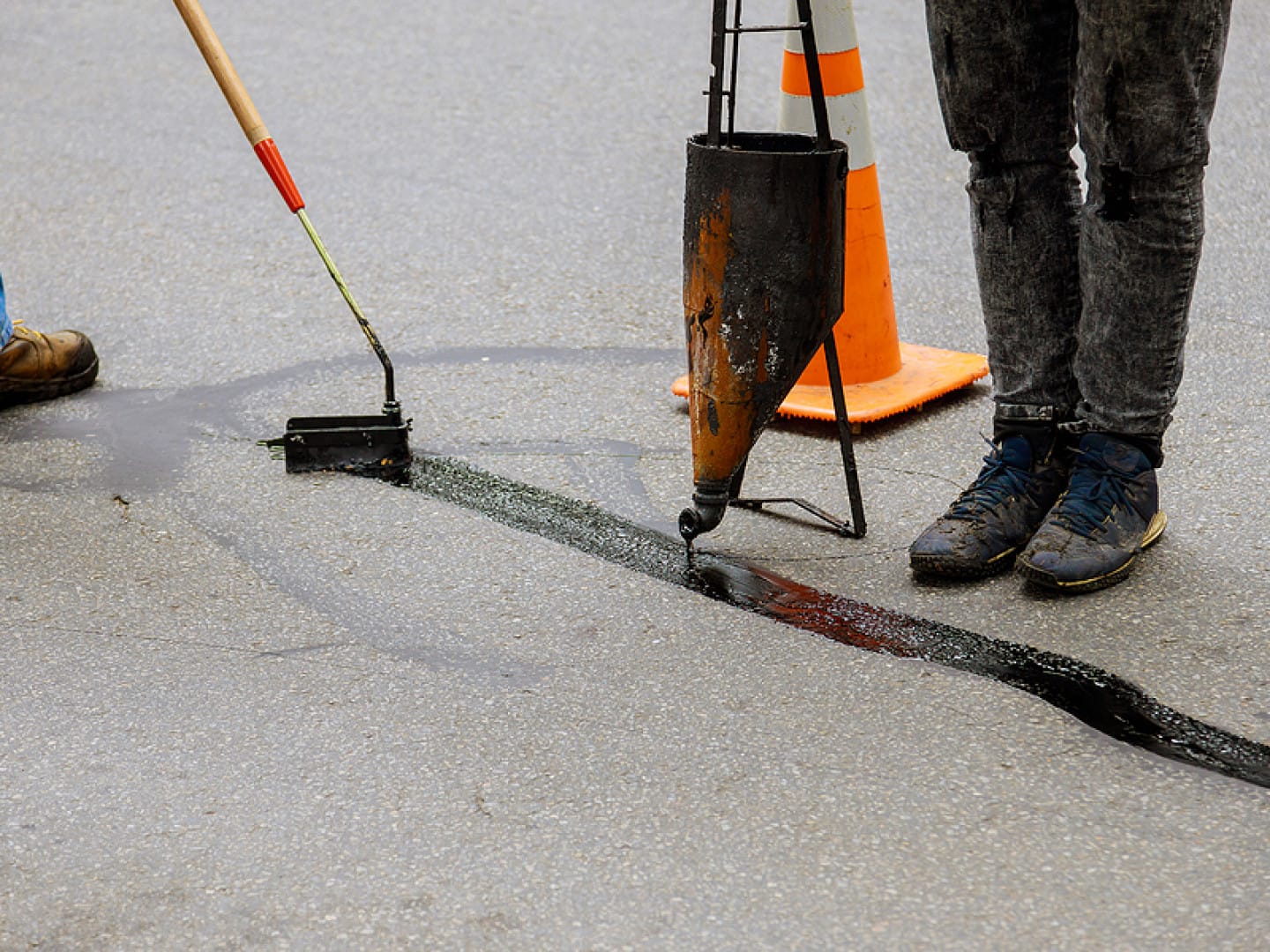
The process is straightforward but detailed. We rout or clean each crack to remove debris and give the sealer a clean sidewall to bond to. We use hot air or torches where necessary to dry damp cracks, which is common near shaded Brooklyn sidewalks or north facing walls. Then we overfill slightly and squeegee the material flat. Done correctly, the filled area is slightly crowned but still smooth for vehicle tires.
Customers often ask if crack filling will look invisible. The answer is no, the repaired lines will be visible, but once sealcoating is applied, the entire surface looks much more uniform and the cracks are sealed from water. The main goal is stopping water migration, not purely cosmetic perfection.
What Drives Cost For Asphalt Sealcoating & Crack Filling in Brooklyn
Pricing in Brooklyn is affected by more than square footage. At Precision Asphalt New York, we measure the area, but we also look at access, number of cracks, and how many phases are required so your property can stay open.
Key cost factors include:
1. Surface condition. A smooth, newer surface needs less prep and less crack material. A 15 year old lot near the waterfront with heavy salt damage and raveling needs more cleaning, more crack work, and sometimes patching before we can seal.
2. Crack density and size. A lot with scattered cracks will use far less crack sealer than one where every few feet has a split. Deep or wide cracks that need routing and multiple passes of material take longer and increase labor cost.
3. Layout and access. Courtyards tucked behind buildings, shared driveways between houses, and tight alleys typical in Brooklyn often require smaller equipment, more manual work, and more time to move vehicles in and out. Wide open supermarket or warehouse lots are more efficient to coat.
4. Material type and number of coats. Choosing a premium sealer, adding extra sand for traction, or going with a third coat in high traffic lanes all affect price. We are clear about these options up front, and we write them into the proposal so there are no surprises.
5. Striping and markings. If we are restriping after sealcoating, we confirm exact layout, ADA spaces, loading zones, and any custom markings like numbers or tenant names. Brooklyn codes and fire lane rules matter, and repainting correctly can be as important as the sealcoat itself.
We provide written estimates that break out crack filling, patching if needed, sealcoating, and striping. That way, you can see what each part of the job costs and adjust based on your budget and priorities instead of accepting one vague lump sum.
How to Prepare, What to Expect, and Why Local Experience Matters
Before we start, we send a simple checklist so you can prepare your Brooklyn property. This usually includes moving vehicles, dumpsters, portable steps, and loose items like planters or pallets. For commercial and multifamily properties, we can provide notice flyers or email language you can send to tenants explaining where they can park and how long the work area will be closed.
On sealcoating day, the crew from Precision Asphalt New York blocks off the work area, walks it with you if you are available, and flags any last minute issues like active leaks, sinkholes, or broken catch basins that might need a different trade. Then we move into cleaning, crack filling, and sealcoat application as planned. At the end, we remove debris, tape, and signage, and make sure everything is clearly marked so no one drives on uncured sealer.
Brooklyn properties have specific issues that we watch for. Snowplow damage that leaves gouges at entrances, drainage patterns that send all the water to one low spot, and settlement along utility trenches that run under driveways are all common. We point these out while we are on site and suggest practical fixes, like small patches or regrading, instead of waiting for a bigger failure.
We also schedule around local realities. For example, on streets with alternate side parking, we may time work to minimize ticket risks for residents. For businesses that get heavy deliveries early in the morning, we might sealcoat later in the day and open lanes in the order that matches your truck schedule.
If you are comparing contractors, ask about the specific products they use in New York weather, how they prepare cracks, and how many coats of sealer they include. Ask to see local jobs that are 2 to 4 years old, not just fresh work. Precision Asphalt New York is happy to show examples in Brooklyn neighborhoods similar to yours, so you can see how proper sealcoating and crack filling actually holds up on the same streets and in the same climate you deal with every day.